

Chat with us on WhatsApp

Brain Haemorrhage

Brain Haemorrhage
Book Appointment
in Neuro Sciences

Apr 19, 2022

Brain haemorrhage is a loose term encompassing a variety of conditions where there is bleeding inside the cranial cavity. The bleeding may occur as a result of injury or may occur spontaneously. Spontaneously occurring brain haemorrhages are:
1. Sub arachnoid haemorrhage
2. Intracerebral haemorrhage
3. Subdural hematoma.

Sub arachnoid haemorrhage (SAH)- SAH occurs most commonly occurs due to head injury.
Second most common and serious cause of SAH is intracranial aneurysm. An aneurysm is a balloon like outpouching from blood vessels supplying the brain. Aneurysms may arise due to various reasons like high blood pressure, collagen vascular disease, smoking, polycystic kidney disease etc. These remain undetected till they rupture and bleed. Symptoms are sudden severe headache with vomiting and loss of consciousness. The patient may or may not regain consciousness depending on the degree of injury caused to the brain. Patients who survive may have rebleeding within next forty-eight hours and may die. Therefore, such patients should immediately be taken to a hospital to confirm SAH where it is diagnosed by doing a CT scan of brain. If SAH is confirmed then the next step is to do a DSA or CT angiography of the brain to detect the aneurysm, its location and anatomy.
Once it is confirmed that the patient is having an aneurysm that has ruptured and caused brain haemorrhage then it must be treated by surgery (clipping) or coiling (by endovascular means) to prevent further rupture and haemorrhage
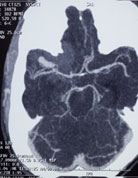
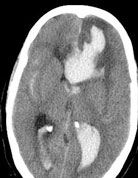
Below is the scan of a young male patient with bleed from an aneurysm. Before surgery patient was unconscious with paralysis of left side of body. After surgery the patient became conscious and his paralysis improved completely.
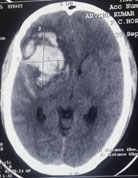
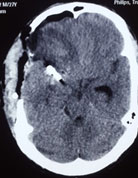
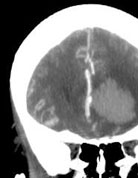
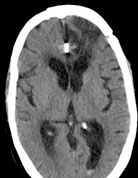
Another patient with massive SAH and ICH was unconscious with paralysis of both legs. After surgery she not only regained consciousness but also started walking.

Book Appointment

Recent Blogs

Imagine this—you’re in the middle of a conversation or just walking down the street, and suddenly, everything goes blank. Or maybe your body jerks uncontrollably for a few seconds, and you have no idea why. This is the reality for millions of people living with epilepsy, a neurological disorder that causes recurrent seizures.
Continue Reading
Alzheimer's disease and Parkinson's disease are both neurological disorders that affect millions of people worldwide. Despite sharing some similarities in terms of symptoms and impact on daily life, they are distinct conditions with unique characteristics.
Continue Reading
A stroke is the body’s way of letting us know that the blood supply to the brain is cut short. It is often called a Brain Attack. Awareness of such a possibility and acting fast can make a big difference for someone who’s having a stroke.
Continue Reading
A tremor is an involuntary, uncontrollable muscle contraction, which manifests as shaking in body parts, most commonly the hands. About 70 percent of Parkinson’s disease patients experience tremors in the early stages of the disease.
Continue Reading
Stroke happens when the blood supply to part of your brain is cut off. Blood involved  essential nutrients and oxygen to your brain. Without blood brain cells can be damaged or die.
Continue Reading
Autism can be defined as a neurological complication that affects the ability to communicate and interact. This ailment can be seen in more than 1 million cases in India. There is at present no treatment to cure the same however there are clinical methods to manage the same.
Continue Reading
Epilepsy is a fairly common chronic or neurological disorder that affects 65 million people around the world. Most people with epilepsy lead outwardly normal lives. The condition can and does affect daily life for people with epilepsy, their family, and their friends.
Continue Reading
Request A Call Back
Didn't Find What You Were Looking For

Get a call back from our Health Advisor