

Chat with us on WhatsApp

Traumatic brain Injury (TBI)


Traumatic brain Injury (TBI)
Book Appointment
in Neuro Sciences

Apr 19, 2022

Signs of Traumatic Brain Injury

Since our brain has the control of all we do, TBI may lead to several problems. A lot depends on how worse the injury is & where in the brain it is located. Some of the problems can include the below:
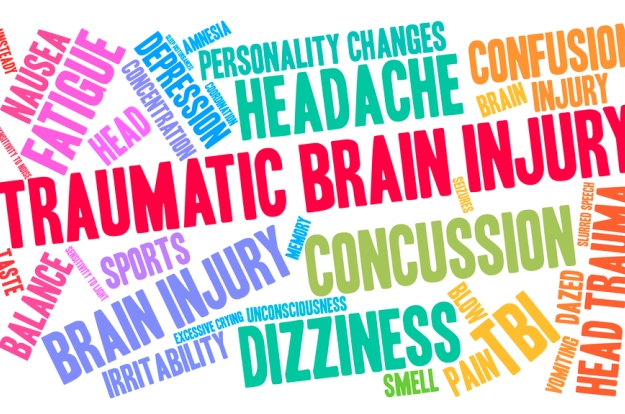
Physical problems– The patient may pass out, have, headaches, seizures, dizziness & vomiting. We may be unable to move some parts of our body and may lose our balance & have problems controlling our arms & legs.

Sensory problems– The patient may be less or more sensitive to sounds, lights & touch.

Behavioral changes- The patient can be more emotional, anxious or angry. They may have mood swings or feel depressed. Events which did not bother the patient earlier may upset them after having TBI

Problems with thinking skills– The patient can have problems with memory, attention problem solving. Higher degree skills such as planning, goals setting & being aware of how they behave can be a problem as well. Learning new information and skills may be tough. However, the patient may probably still recollect most events before the injury.

Language and speech problems– Our speech can be tough to understand post the injury. This could be because of weak muscles, known as dysarthria. Or we may have trouble controlling our muscles, known as apraxia. We may not comprehend what others say to us or what we read. We may also find it tough to use words to communicate with others. Writing or spelling may also be a big problem.

Social communication problems– You may be unable to comprehend jokes or any nonverbal cues. I.e. You may not get what someone means while they nod their shoulders. You may interrupt other or have a bad timing by saying wrong things at wrong time.

Problems in swallowing, known as dysphagia- Patients may have problems in chewing or may even cough & choke while they eat.

If you have any of the above problems do not hesitate to visit your doctor.

Book Appointment

Recent Blogs

Imagine this—you’re in the middle of a conversation or just walking down the street, and suddenly, everything goes blank. Or maybe your body jerks uncontrollably for a few seconds, and you have no idea why. This is the reality for millions of people living with epilepsy, a neurological disorder that causes recurrent seizures.
Continue Reading
Alzheimer's disease and Parkinson's disease are both neurological disorders that affect millions of people worldwide. Despite sharing some similarities in terms of symptoms and impact on daily life, they are distinct conditions with unique characteristics.
Continue Reading
A stroke is the body’s way of letting us know that the blood supply to the brain is cut short. It is often called a Brain Attack. Awareness of such a possibility and acting fast can make a big difference for someone who’s having a stroke.
Continue Reading
A tremor is an involuntary, uncontrollable muscle contraction, which manifests as shaking in body parts, most commonly the hands. About 70 percent of Parkinson’s disease patients experience tremors in the early stages of the disease.
Continue Reading
Stroke happens when the blood supply to part of your brain is cut off. Blood involved  essential nutrients and oxygen to your brain. Without blood brain cells can be damaged or die.
Continue Reading
Autism can be defined as a neurological complication that affects the ability to communicate and interact. This ailment can be seen in more than 1 million cases in India. There is at present no treatment to cure the same however there are clinical methods to manage the same.
Continue Reading
Epilepsy is a fairly common chronic or neurological disorder that affects 65 million people around the world. Most people with epilepsy lead outwardly normal lives. The condition can and does affect daily life for people with epilepsy, their family, and their friends.
Continue Reading
Request A Call Back
Didn't Find What You Were Looking For

Get a call back from our Health Advisor