

Chat with us on WhatsApp

Who can donate blood? Tips and misconceptions of blood donation


Who can donate blood? Tips and misconceptions of blood donation
Book Appointment
in General

Apr 19, 2022

Most of the people can donate blood. One can donate blood if he/she:

  • Are healthy and fit
  • Weigh more than 50 kgs
  • Are aged between 17 & 66 years (or 70 years if they have given blood earlier)
  • Are more than 70 years of age and have donated blood in past 2 years
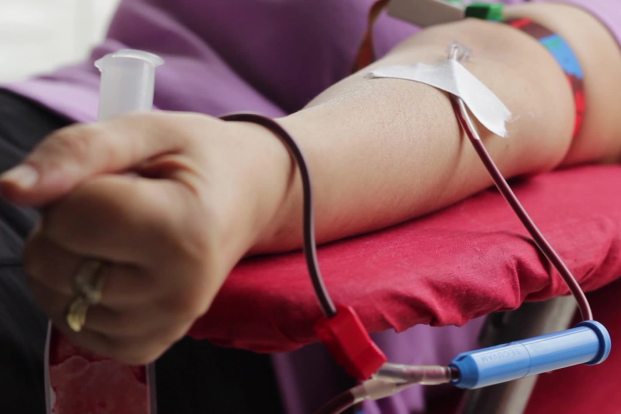
tips and misconceptions of blood donation

How often to donate blood?

Men can donate blood every 12 weeks and women can donate it every 16 weeks

Women below 20 years-

A female below 20 years of age weighing below 65 kgs or shorter than 168 cm or 5’6’’ height, would need to estimate her volume of blood to see if they can donate blood. They should consult a doctor prior to donating blood.

Tips on donating blood:

  • The donor should have a good meal at least 3 hours prior to blood donation
  • A donor should accept the snacks they are offered after donating blood as it is good for their health. They are recommended to take good meal later.
  • A donor should avoid smoking on the day prior to blood donation. They may do so after 3 hours.
  • Do not take alcohol at last 48 hours before donating blood

Misconceptions about blood donation

  • Donor would not feel tired or drained if they continue to take fluids and take good meal
  • A donor can resume their normal activities post blood donation, though they are asked not to exercise or take the heavyweight for 12 hours after donating blood.
  • Blood donation would not reduce blood in the body of donor, rather it would give them surplus blood post donation
  • Donor can consume alcohol the next day
  • There is no pain during blood donation
  • The donor would not feel uncomfortable or not faint post blood donation.
  • A blood donor does not get AIDS
  • A patient is just as a donor. Most of the patients have common blood types. As your blood type is common, there is more demand for that type as compared to the rare types. Therefore, even if donor’s blood type is common the requirement still exists.

.


Book Appointment

Recent Blogs

With all experts and government bodies warning civilians of signs and symptoms of Covid 19 3rd wave, its arrival is not a question of if rather than it is of when. With news channels reporting potential new symptoms of COVID 3rd wave, it can be confusing and stressful to understand how to keep yourself safe from Covid 3rd wave in India. 
Continue Reading
With COVID19 still spreading across India and the arrival of other flu diseases, viral infection and scrub typhus disease with the seasonal monsoon, we are all collectively prone to catching mystery viral fever symptoms.
Continue Reading
As the second wave of covid 19 in India recedes, it is important to educate oneself about new covid delta variant and progression in the virus as we begin to prepare ourselves for a possible third wave of covid in India. Out of the numerous new covid delta variant and delta plus variant are particularly crucial when considering the 3rd wave of covid variant in India. 
Continue Reading
f you are diabetic or know someone who has diabetes during COVID, the question how does covid-19 affect diabetes patients, must be at the top of your mind. A person who has COVID and diabetes, is said to have a comorbidity.
Continue Reading
Pandemic conditions are getting better in India, but experts are raising concerns over an even more harmful COVID 3rd wave in India. third wave of corona is inevitable, according to experts, and the symptoms of 3rd wave Covid, delta variant are likely to be worse than the symptoms of the first two waves of Covid. 
Continue Reading
Blood donation is a life saving noble cause which helps in treating multiple health problems. A person who gives blood during the time of emergency are applauded for their selfless act. 1 person donating blood can save the lives of 3 people.
Continue Reading
Malaria  is one of the oldest infections that  causes suffering amongst mankind.For several years cholorquin was the mainstay of treatment. However now for sometime the plasmodium bug which causes malaria has become resistant to this except in areas  where malaria prevalence is low.
Continue Reading
Request A Call Back
Didn't Find What You Were Looking For

Get a call back from our Health Advisor