



MBBS, MS (ORTHO), FASIF, FIAMS, Fellowship in Robotic Joint Replacement Surgery & Ortho-Oncology (CFO, Singapore)
Successful Treatment of a Rare Giant Cell Tumor of the Femoral Head with Limb-Sparing Hip Reconstruction
An 18-year-old male from Ambala presented to Paras Health with a three-month history of progressively worsening pain in his right hip. The pain had become severe enough to interfere with walking and other weight-bearing activities, significantly affecting his daily life. He had no history of...
An 18-year-old male from Ambala presented to Paras Health with a three-month history of progressively worsening pain in his right hip. The pain had become severe enough to interfere with walking and other weight-bearing activities, significantly affecting his daily life. He had no history of trauma or any underlying medical illness.
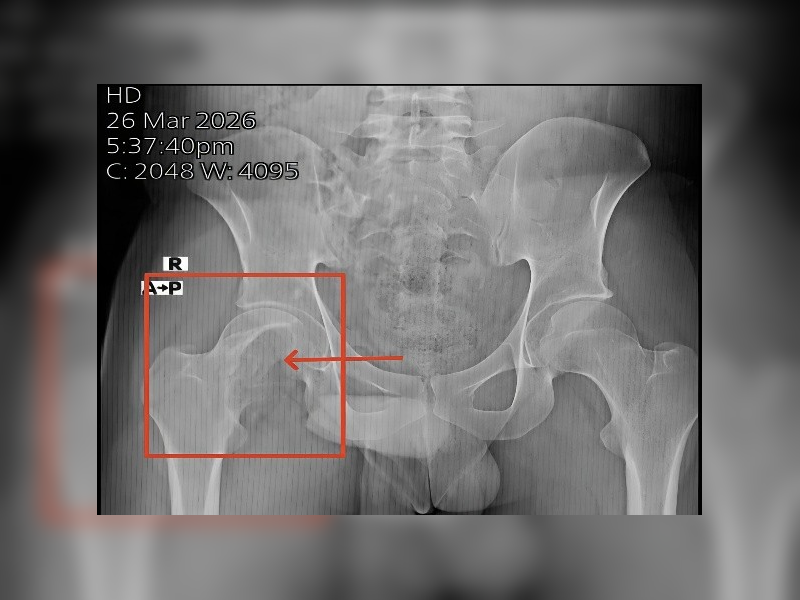
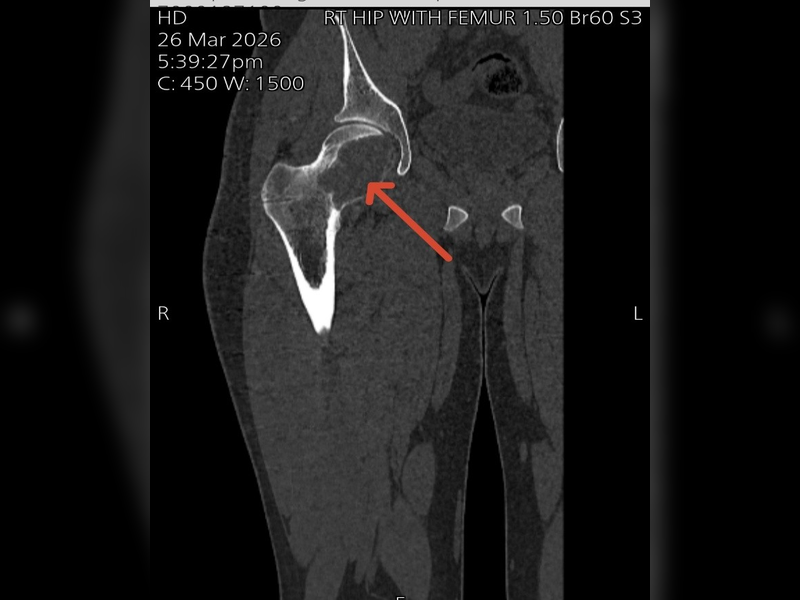
On examination, the patient had restricted movement of the right hip along with localized tenderness. Initial X-rays revealed a suspicious lytic lesion in the femoral head. Further evaluation with CT and MRI confirmed a large expansile bone lesion with thinning of the surrounding cortex. A needle biopsy was subsequently performed, and histopathological analysis confirmed the diagnosis of a Giant Cell Tumor (GCT) of the femoral head—a rare, benign but locally aggressive bone tumor. While giant cell tumors commonly occur around the knee, involvement of the femoral head is extremely uncommon, particularly in young patients.
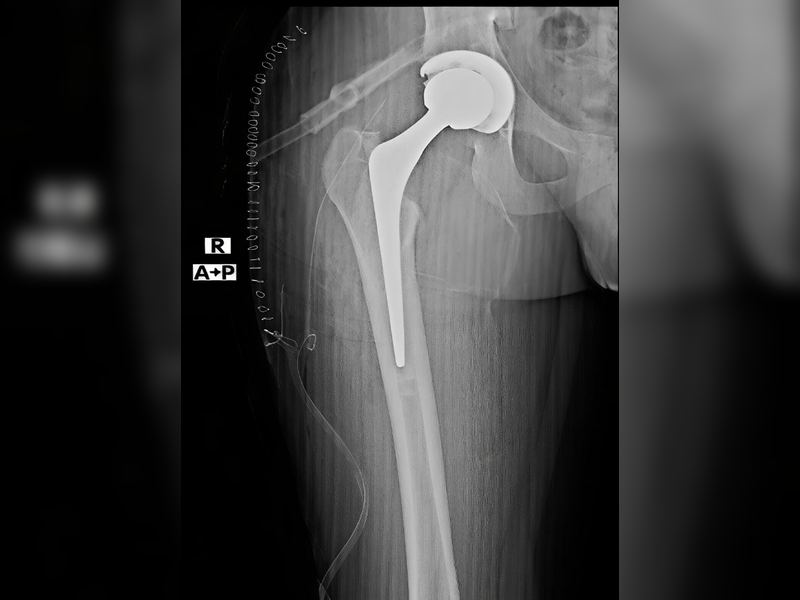
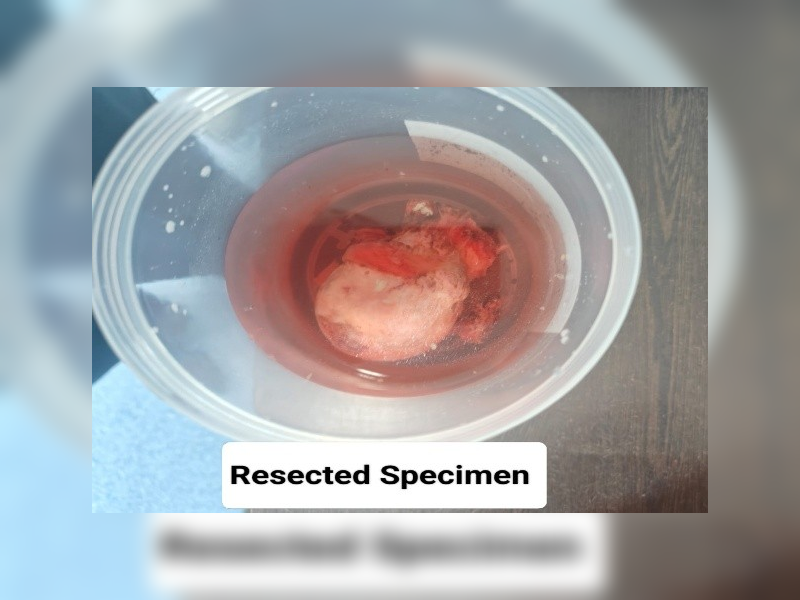
Following detailed discussions with the patient and his family, the orthopaedic team planned a limb-sparing surgical procedure. A wide-margin resection of the proximal femur was successfully performed, followed by reconstruction using a hybrid Total Hip Replacement (THR) prosthesis. The surgery was completed without complications.
The patient experienced an excellent recovery, with significant pain relief immediately after surgery. Early rehabilitation was initiated with partial weight-bearing, enabling a smooth recovery. Final histopathology confirmed complete tumor removal with clear surgical margins.
At the six-month follow-up, the patient remains pain-free, walks independently, has regained excellent hip function, and shows no evidence of tumor recurrence.
This case highlights the importance of early diagnosis, advanced imaging, precise surgical planning, and multidisciplinary care in managing rare bone tumors. With timely intervention and modern limb-preserving surgical techniques, even complex orthopedic tumors can be treated successfully while restoring mobility, preserving function, and significantly improving a young patient's quality of life.