
Pears vs Guava: Complete Nutrition Comparison & Health Benefits
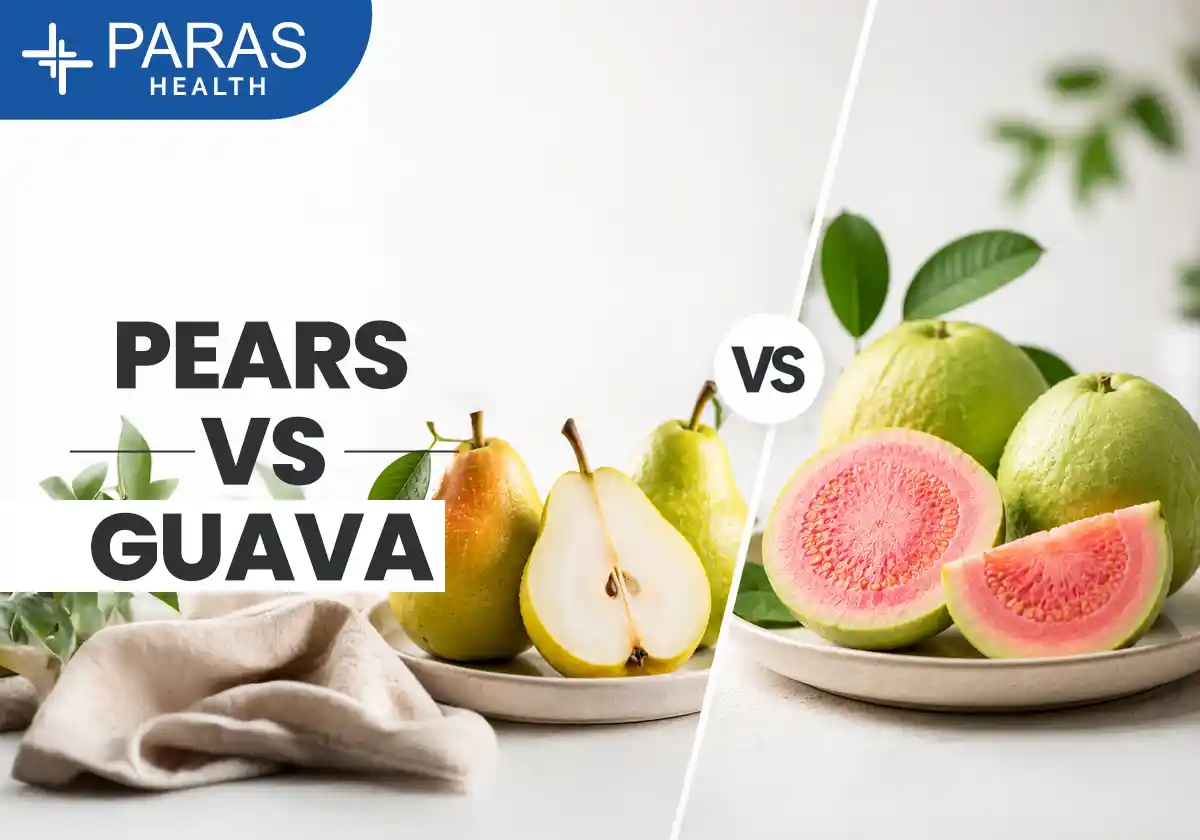
TABLE OF CONTENTS

When it comes to choosing healthy fruits, Pears vs Guava is a comparison many health-conscious people search for. Both fruits are packed with essential nutrients, natural fiber, vitamins, and antioxidants, making them excellent additions to a balanced diet. But if your goal is weight loss, better blood sugar control, improved digestion, or stronger immunity, which one should you pick?
The truth is, there isn't a one-size-fits-all answer. The better choice depends on your age, health conditions, lifestyle, and nutritional needs. In this guide, we'll compare pear nutrition vs guava nutrition, including calories, fiber, vitamins, glycemic index, and health benefits, so you can make an informed decision.
Pear vs Guava: Quick Nutrition Comparison
|
Nutrient (Per 100g) |
Pear |
Guava |
|
Calories |
57 kcal |
68 kcal |
|
Carbohydrates |
15 g |
14 g |
|
Protein |
0.4 g |
2.6 g |
|
Dietary Fiber |
3.1 g |
5.4 g |
|
Natural Sugar |
9.8 g |
8.9 g |
|
Vitamin C |
4.3 mg |
228 mg |
|
Potassium |
116 mg |
417 mg |
|
Glycemic Index |
30–38 |
12–24 |
Values are approximate and may vary slightly depending on the variety and ripeness.
What is a Pear?
Pears are sweet, juicy fruits known for their soft texture and mild flavour. They are naturally rich in dietary fiber, water, and plant compounds that support digestive health. Pears are easy on the stomach, making them suitable for children, older adults, and people with sensitive digestion.
Health Highlights
- Low in calories
- Good source of soluble fiber
- Naturally hydrating
- Supports digestive health
- Easy to digest
What is Guava?
Guava is often referred to as a nutritional powerhouse. It contains exceptionally high amounts of Vitamin C, along with fiber, potassium, antioxidants, and small amounts of protein.
One medium guava can provide more than twice the daily recommended intake of Vitamin C, making it one of the best fruits for strengthening immunity.
Health Highlights
- Extremely rich in Vitamin C
- High in dietary fiber
- Good source of antioxidants
- Supports immunity
- Helps maintain healthy digestion
Pear vs Guava: Nutrition Comparison
Calories
If you're comparing Pear calories vs Guava calories, both fruits are relatively low in calories.
- Pear: Approximately 57 kcal per 100 g
- Guava: Approximately 68 kcal per 100 g
Although guava contains slightly more calories, the difference is small and should not discourage you from including it in your diet.
Protein
Most fruits contain very little protein, but guava stands out.
- Pear: 0.4 g protein
- Guava: 2.6 g protein
If you're looking to increase protein intake from fruits, guava is the better option.
Dietary Fiber
When comparing Pear fiber vs Guava fiber, guava takes the lead.
Fiber helps:
- Improve digestion
- Prevent constipation
- Keep you full longer
- Support healthy gut bacteria
Both fruits contribute to daily fiber intake, but guava provides significantly more fiber per serving.
Sugar Content
Both fruits contain naturally occurring sugars rather than added sugars.
- Pear has slightly higher natural sugar.
- Guava contains more fiber, which slows sugar absorption.
This makes both fruits suitable in moderation, especially when eaten whole rather than as juice.
Vitamin C
This is where guava clearly stands out.
Guava contains nearly 50 times more Vitamin C than pears. Vitamin C plays an important role in:
- Building immunity
- Supporting collagen production
- Improving wound healing
- Protecting cells from oxidative stress
If your goal is stronger immunity, guava is an excellent choice.
Potassium
Potassium helps regulate blood pressure, muscle function, and nerve signals.
Guava contains considerably more potassium than pears, making it beneficial for people looking to support heart health.
Glycemic Index
The glycemic index (GI) measures how quickly foods raise blood sugar levels.
- Pear GI: Low
- Guava GI: Very low
Both fruits are diabetes-friendly when eaten in appropriate portions.
Pear vs Guava: Health Benefits
Pear vs Guava for Weight Loss
If your goal is weight loss, both fruits can fit into a healthy eating plan.
Pears contain plenty of water and soluble fiber, helping you feel satisfied after eating. Guava offers more fiber and protein, which may keep hunger away for longer.
Best Choice: Both are excellent, but guava may provide slightly better satiety because of its higher fiber and protein content.
Pear vs Guava for Diabetes
People with diabetes often wonder which fruit is safer.
Both fruits have a low glycemic index, but guava's higher fiber content may help slow glucose absorption.
Tips:
- Eat whole fruit instead of juice.
- Stick to moderate portion sizes.
- Pair fruit with nuts or yogurt for better blood sugar control.
Pear vs Guava for Digestion
Pears are known for their gentle effect on digestion because they contain soluble fiber, while guava supports digestive health with its higher total fiber content.
Both fruits may help relieve constipation and promote regular bowel movements.
Pear vs Guava for Immunity
There is no contest here.
Guava is one of the richest natural sources of Vitamin C, helping strengthen the immune system and support recovery from infections.
Pears also contain antioxidants but in much smaller amounts.
Pear vs Guava for Heart Health
Both fruits support heart health in different ways.
Pears:
- Soluble fiber may help lower LDL ("bad") cholesterol.
- Naturally low in sodium.
Guava:
- Rich in potassium.
- High in antioxidants.
- Supports healthy blood pressure.
Including a variety of fruits is the best approach for cardiovascular health.
Pear vs Guava for Skin
Healthy skin benefits from nutrients such as Vitamin C and antioxidants.
Guava's high Vitamin C content supports collagen formation, while antioxidants help protect the skin from environmental damage.
Pears also contribute hydration and antioxidants that promote healthy skin.
Pear vs Guava During Pregnancy
Both fruits can be included in pregnancy as part of a balanced diet.
Pears provide hydration and fiber, which may help ease constipation. Guava offers Vitamin C and folate that support maternal nutrition.
Always wash fruits thoroughly and consult your healthcare provider if you have any dietary concerns during pregnancy.
Pear vs Guava for Children
Children benefit from both fruits.
Pears are soft, mildly sweet, and easy to digest, making them ideal for younger children.
Guava provides Vitamin C and fiber, supporting immunity and digestive health.
Pear vs Guava for Older Adults
Older adults often need foods that support digestion, immunity, and heart health.
Pears are gentle on the digestive system, while guava offers higher levels of nutrients that promote healthy ageing.
Who Should Choose Pear?
Choose pears if you:
- Prefer a mild, juicy fruit.
- Have a sensitive stomach.
- Need gentle digestive support.
- Enjoy lower-acid fruits.
- Want an easy everyday snack.
Who Should Choose Guava?
Choose guava if you:
- Want more Vitamin C.
- Need extra fiber.
- Are working on weight management.
- Want stronger immunity.
- Need more potassium in your diet.
Can You Eat Pear and Guava Together?
Absolutely.
Combining pears and guava provides a wider variety of nutrients. Add them to fruit salads, smoothies, yogurt bowls, or enjoy them as a refreshing snack.
Eating different fruits throughout the week helps ensure a broader intake of vitamins, minerals, and antioxidants.
Common Mistakes to Avoid
- Drinking fruit juice instead of eating whole fruits.
- Assuming all healthy fruits can be eaten in unlimited quantities.
- Ignoring portion sizes if you have diabetes.
- Skipping fruit because of natural sugar.
- Relying on only one fruit instead of eating a variety.
Pears vs Guava: Which One Should You Choose?
The answer depends on your health goals.
Choose Guava if your priority is:
- Higher Vitamin C
- Better immunity
- More fiber
- Greater antioxidant intake
- Higher protein among fruits
Choose Pear if you prefer:
- A softer, easy-to-digest fruit
- Gentle digestive support
- Mild sweetness
- A hydrating snack
Ultimately, both fruits are nutritious choices. Rather than deciding between Pears vs Guava, consider including both in your weekly diet to enjoy the unique benefits each offers.
Key Facts
- Guava contains one of the highest amounts of Vitamin C among commonly eaten fruits.
- Pears are naturally low in calories and rich in soluble fiber.
- Both fruits have a low glycemic index and can be included in a diabetes-friendly diet in moderation.
- Guava provides more protein, fiber, potassium, and antioxidants than pears.
- Whole fruits are healthier than fruit juices because they retain their natural fiber.
- Eating a variety of fruits provides broader nutritional benefits than relying on a single fruit.
Conclusion
The Pears vs Guava debate isn't about finding a winner—it's about finding what works best for your body. If you're looking for a fruit rich in Vitamin C, fiber, and antioxidants, guava is an excellent choice. If you prefer a gentle, hydrating, and easy-to-digest fruit, pears are equally valuable.
For the best long-term health, include a variety of seasonal fruits in your daily meals. If you have diabetes, kidney disease, digestive disorders, or other medical conditions, consult a qualified healthcare professional or registered dietitian for personalized nutrition advice tailored to your specific health needs.
FAQs
Which is healthier, pears or guava?
Both are healthy, but guava provides more Vitamin C, fiber, and antioxidants, while pears are easier to digest and naturally hydrating.
Is guava better than pear for weight loss?
Guava may support weight loss slightly better because it contains more fiber and protein, helping you stay full for longer.
Which fruit has more Vitamin C?
Guava contains significantly more Vitamin C than pears, making it one of the best fruits for supporting immunity.
Is pear good for people with diabetes?
Yes. Pears have a low glycemic index and provide fiber, which may help support healthy blood sugar levels when eaten in moderation.
Can diabetics eat guava every day?
Many people with diabetes can include guava as part of a balanced diet because of its low glycemic index and high fiber. Portion control remains important.
Which fruit has more fiber, pear or guava?
Guava contains considerably more dietary fiber, making it a great option for digestive health and satiety.
Which fruit is better for digestion?
Both fruits support digestion. Pears are gentle on the stomach, while guava's higher fiber content helps promote regular bowel movements.
Can I eat pear and guava together?
Yes. Eating both together provides a broader range of nutrients and makes for a healthy, fiber-rich snack.
Which fruit has fewer calories?
Pears contain slightly fewer calories than guava, but both are considered low-calorie fruits suitable for healthy eating.
Which fruit is better for immunity?
Guava is the better choice for immunity because of its exceptionally high Vitamin C and antioxidant content.

Dr. Ranjana Bhatt is a Physician with 12+ years of experience in General Medicine, specializing in diabetes, hypertension, infectious diseases, geriatric care, and chronic disease management.
Meet The Doctor
 Eng .webp)