
Achalasia Disease: Early Signs, Diagnosis & Treatment
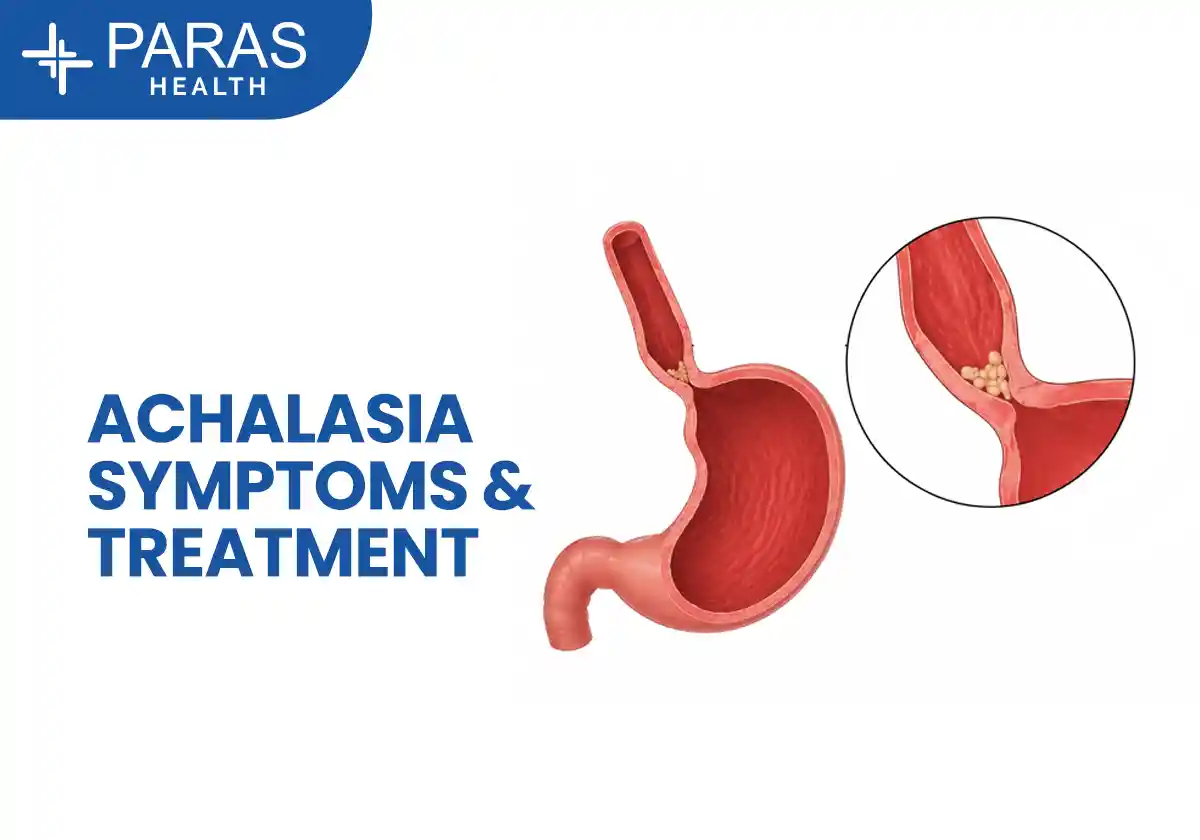
TABLE OF CONTENTS
- What Is Achalasia Disease?
- What Causes Achalasia?
- Early Signs and Symptoms of Achalasia
- When Should You See a Doctor?
- How Is Achalasia Diagnosed?
- Types of Achalasia
- Recovery After Achalasia Treatment
- Diet Tips for People with Achalasia
- What Happens If Achalasia Is Left Untreated?
- Can Achalasia Be Cured?
- Key Facts About Achalasia Disease
- Conclusion
- FAQs

Swallowing is something most of us rarely think about—until it becomes difficult. If you've ever felt like food is getting stuck in your chest, struggled to swallow both solids and liquids, or experienced frequent regurgitation after meals, your body may be trying to tell you something important. While occasional swallowing problems can happen for many reasons, persistent symptoms should never be ignored.
One possible cause is Achalasia disease, a rare but treatable condition that affects the food pipe (esophagus). Unlike temporary swallowing problems caused by a sore throat or acid reflux, achalasia gradually makes it harder for food and drinks to pass into the stomach. Left untreated, it can affect nutrition, quality of life, and overall health.
The good news is that modern medical advancements have made achalasia treatment highly effective. Early diagnosis, personalized treatment planning, and timely intervention can help most people regain comfortable swallowing and return to normal daily activities.
This guide explains everything you need to know about achalasia disease, including its causes, early symptoms, diagnosis, and the treatment options available.
What Is Achalasia Disease?
Achalasia is a chronic esophageal motility disorder in which the muscles of the food pipe fail to move food normally toward the stomach. At the same time, the lower esophageal sphincter (LES)—the muscular valve between the esophagus and stomach—does not relax properly during swallowing.
Under normal circumstances, when you swallow, coordinated muscle contractions push food downward while the LES opens to allow food into the stomach. In people with achalasia esophagus, this valve remains tightly closed or relaxes only partially. As a result, food and liquids remain trapped inside the esophagus.
Over time, the esophagus stretches and enlarges because food continues to collect inside it. This can make swallowing increasingly difficult and may lead to complications if treatment is delayed.
Although achalasia disease is uncommon, it can affect both men and women and usually develops between the ages of 25 and 60 years. However, it can occur at almost any age.
What Causes Achalasia?
The exact cause of achalasia is still not completely understood. Researchers believe that the condition develops when the nerve cells controlling the muscles of the esophagus become damaged.
Without these healthy nerves, the muscles cannot contract properly and the LES fails to relax, preventing food from moving normally.
Possible causes include:
Damage to Esophageal Nerves
The most accepted explanation is the gradual degeneration of nerve cells responsible for swallowing movements.
Autoimmune Conditions
Some experts believe the body's immune system may mistakenly attack healthy nerve cells in the esophagus, contributing to achalasia disease.
Viral Infections
Certain viral infections have been studied as possible triggers, although no direct cause has been confirmed.
Genetic Factors
Most cases are not inherited, but a small number of patients may have a genetic predisposition.
Unknown Causes (Idiopathic Achalasia)
For many people, no definite cause is identified, making it an idiopathic condition.
Who Is at Higher Risk?
The condition may be more likely in:
- Adults aged 25–60 years
- People with autoimmune disorders
- Individuals with rare genetic syndromes
- Both men and women equally
Early Signs and Symptoms of Achalasia
The symptoms of achalasia usually develop slowly over months or even years. Many people initially mistake them for acidity, indigestion, or stress-related digestive problems.
Recognizing the early signs of achalasia can help prevent complications and allow treatment before symptoms become severe.
Difficulty Swallowing (Dysphagia)
The hallmark symptom is difficulty swallowing or dysphagia.
Initially, swallowing solid foods becomes difficult. Over time, even liquids may become hard to swallow. Many people describe the sensation as food getting stuck in the middle of the chest.
Food Stuck in the Chest
Because the LES does not open properly, swallowed food remains inside the esophagus rather than reaching the stomach. This often creates a feeling of fullness or blockage after meals.
Regurgitation After Eating
Unlike vomiting, regurgitation involves undigested food coming back into the mouth without nausea. This commonly occurs after eating or while lying down.
Chest Pain or Discomfort
Some people experience chest pain or pressure, particularly during meals. This discomfort may sometimes resemble heart-related chest pain, making proper medical evaluation important.
Persistent Heartburn-Like Symptoms
Many patients are initially treated for acid reflux because the symptoms can appear similar. However, medications for reflux often provide little relief when achalasia disease is the underlying cause.
Night-Time Coughing
Food trapped inside the esophagus may flow backward while sleeping, causing coughing, choking, or interrupted sleep.
Unexplained Weight Loss
As swallowing becomes more difficult, many individuals begin eating less, resulting in gradual weight loss and nutritional deficiencies.
Bad Breath
Food remaining inside the esophagus for prolonged periods may produce an unpleasant odor, leading to persistent bad breath.
When Should You See a Doctor?
Occasional swallowing difficulty may not always indicate a serious condition. However, persistent symptoms deserve prompt medical evaluation.
Consult a healthcare professional if you experience:
- Difficulty swallowing that continues for more than two weeks
- Food frequently getting stuck while eating
- Chest discomfort during meals
- Frequent regurgitation of undigested food
- Night-time choking or coughing
- Unexplained weight loss
- Recurrent chest infections
- Difficulty swallowing both solids and liquids
Early consultation with a gastroenterologist can help determine whether your symptoms are caused by achalasia, acid reflux, or another swallowing disorder.
Remember that swallowing problems should never be ignored, especially if they gradually worsen over time.
How Is Achalasia Diagnosed?
Because the symptoms of achalasia disease resemble those of several digestive disorders, doctors use specialized tests to confirm the diagnosis.
Medical History and Physical Examination
Your doctor will ask about:
- How long swallowing problems have been present
- Whether symptoms occur with solids, liquids, or both
- Weight changes
- Regurgitation episodes
- Previous digestive conditions
This helps narrow down possible causes before additional testing.
Upper GI Endoscopy
An upper gastrointestinal endoscopy allows the doctor to examine the inside of the esophagus and stomach using a thin, flexible camera.
This test helps rule out other conditions such as tumors, strictures, or severe inflammation that can mimic achalasia symptoms.
Esophageal Manometry
Esophageal manometry is considered the gold standard for diagnosing achalasia.
A thin tube is gently passed through the nose into the esophagus to measure muscle contractions and evaluate how well the LES relaxes during swallowing.
This test confirms abnormal esophageal movement and helps classify the type of achalasia.
High-Resolution Manometry
An advanced version of standard manometry, high-resolution manometry provides detailed pressure maps of the esophagus, enabling more accurate diagnosis and treatment planning.
Barium Swallow Test
During a barium swallow test, the patient drinks a contrast liquid before X-rays are taken.
The images reveal how food moves through the esophagus and often show the characteristic narrowing near the LES, commonly described as a "bird's beak" appearance.
Timed Barium Esophagram
This specialized imaging study measures how effectively the esophagus empties over time and is useful for assessing treatment outcomes as well.
Types of Achalasia
Modern diagnostic techniques classify achalasia disease into three main types based on muscle activity within the esophagus.
Type I (Classic Achalasia)
The esophagus shows very little muscle activity. Food movement is poor, and symptoms often progress gradually.
Type II Achalasia
This is the most common form. The esophagus generates pressure but lacks coordinated movement. Patients with Type II generally respond very well to treatment.
Type III (Spastic Achalasia)
In this type, abnormal muscle spasms occur in the esophagus, often causing significant chest pain along with swallowing difficulty. It may require specialized treatment approaches.
Identifying the exact type of achalasia helps doctors recommend the most appropriate treatment and improve long-term outcomes.
Personalized Treatment Options for Achalasia
Once achalasia disease is diagnosed, the next step is choosing the most suitable treatment. There isn't a one-size-fits-all solution. Your doctor will recommend a treatment based on several factors, including:
- Your age and overall health
- The type of achalasia
- Severity of your symptoms
- How much the esophagus has been affected
- Your personal preferences and lifestyle
The goal of achalasia treatment is to reduce pressure at the lower esophageal sphincter (LES) so that food and liquids can pass into the stomach more easily. Although treatment cannot restore the damaged nerves, it can provide long-lasting symptom relief and significantly improve quality of life.
Lifestyle and Dietary Changes
Lifestyle changes alone cannot cure achalasia disease, but they can make eating more comfortable and reduce symptoms.
Doctors often recommend:
- Eat smaller meals throughout the day instead of large meals.
- Chew food thoroughly before swallowing.
- Eat slowly and avoid rushing meals.
- Sip water while eating to help food move downward.
- Remain upright for at least 2–3 hours after meals.
- Avoid eating just before bedtime.
- Sleep with the head of the bed slightly elevated if nighttime regurgitation is common.
These simple habits can make a noticeable difference, especially in the early stages of the disease.
Medications
Medicines have only a limited role in treating achalasia. They may be considered for people who are not suitable candidates for procedures or surgery.
Some medications help relax the LES temporarily, but their effects are usually short-lived. Because of this, they are generally not considered a long-term solution.
Pneumatic Balloon Dilation
Pneumatic dilation is one of the most commonly performed non-surgical treatments for achalasia.
During the procedure, a balloon is placed inside the LES using an endoscope and then inflated carefully. This stretches the tight muscle, allowing food to pass more easily into the stomach.
Benefits
- No external cuts
- Short hospital stay
- Quick recovery
- Effective symptom relief for many patients
Some individuals may require repeat dilations over time if symptoms return.
POEM (Peroral Endoscopic Myotomy)
POEM surgery (Peroral Endoscopic Myotomy) is an advanced minimally invasive endoscopic procedure that has transformed the treatment of achalasia disease.
Instead of making external incisions, the surgeon passes an endoscope through the mouth and creates a small tunnel within the wall of the esophagus. The tight muscle fibers of the LES are then divided, allowing food to move freely into the stomach.
Advantages of POEM Surgery
- No external scars
- Minimally invasive procedure
- Faster recovery
- Excellent long-term symptom relief
- Suitable for all types of achalasia, including Type III (spastic achalasia)
Today, POEM surgery is considered one of the most effective treatments for many patients with achalasia.
Laparoscopic Heller Myotomy
Heller myotomy has been the standard surgical treatment for achalasia for many years and continues to deliver excellent long-term results.
In this minimally invasive procedure, small incisions are made in the abdomen, and the tight LES muscle is carefully divided. Surgeons often combine it with a procedure to reduce the risk of acid reflux after surgery.
Benefits
- Proven long-term effectiveness
- Durable symptom relief
- Minimally invasive approach
- High success rates
For many patients, Heller myotomy remains an excellent treatment option.
Robotic Achalasia Surgery
Some hospitals also offer robotic achalasia surgery, where surgeons perform the procedure using robotic-assisted technology.
The robotic system provides enhanced precision, better visualization, and improved control during surgery. While the surgical principles remain the same, robotic assistance may offer additional advantages in selected cases.
Botox Injection
A Botox injection into the LES temporarily relaxes the muscle and improves swallowing.
Doctors generally recommend this option for:
- Elderly patients
- Individuals who are not fit for surgery
- Patients with significant medical conditions
Since the effects wear off over time, repeat injections are often necessary.
Recovery After Achalasia Treatment
Recovery depends on the type of treatment received, but most people experience gradual improvement in swallowing over the following days or weeks.
After treatment, patients are usually advised to:
- Start with clear liquids before progressing to soft foods.
- Eat slowly during the recovery period.
- Stay well hydrated.
- Follow the diet plan recommended by the healthcare team.
- Attend scheduled follow-up visits.
Some people may experience mild acid reflux after POEM surgery or Heller myotomy, which can often be managed with medications and lifestyle modifications.
Regular follow-up helps ensure that swallowing continues to improve and allows doctors to identify any recurring symptoms early.
Diet Tips for People with Achalasia
Following an appropriate achalasia diet can help reduce discomfort and make swallowing easier.
Foods That Are Easier to Swallow
- Soups
- Yogurt
- Oatmeal
- Mashed vegetables
- Soft fruits
- Rice porridge
- Scrambled eggs
- Smoothies
- Well-cooked pasta
Foods to Limit or Avoid
People with achalasia may find it helpful to reduce foods that are difficult to swallow, including:
- Dry bread
- Tough meat
- Large bites of food
- Dry rice
- Hard crackers
- Sticky foods
Drinking water between bites can also help food move through the esophagus more comfortably.
What Happens If Achalasia Is Left Untreated?
Without treatment, achalasia disease usually progresses gradually.
Possible achalasia complications include:
- Severe swallowing difficulty
- Significant weight loss
- Malnutrition
- Enlargement of the esophagus (megaesophagus)
- Frequent regurgitation
- Aspiration pneumonia caused by food entering the lungs
- Reduced quality of life
Although uncommon, long-standing untreated achalasia is also associated with a slightly increased risk of esophageal cancer, which is why timely diagnosis and regular follow-up are important.
Can Achalasia Be Cured?
One of the most common questions patients ask is, "Can achalasia be cured?"
Currently, there is no permanent cure that restores the damaged nerves responsible for the condition. However, modern treatments can successfully relieve symptoms by reducing the tightness of the LES.
Most people experience significant improvement after procedures such as POEM surgery, Heller myotomy, or pneumatic balloon dilation and are able to return to their normal daily routines.
With regular follow-up and healthy lifestyle habits, many patients enjoy long-term symptom control and an excellent quality of life.
Key Facts About Achalasia Disease
- Achalasia is a rare esophageal motility disorder that affects swallowing.
- The main symptom is progressive difficulty swallowing both solids and liquids.
- Esophageal manometry is the gold-standard test for diagnosis.
- High-resolution manometry helps identify the specific type of achalasia.
- POEM surgery and Heller myotomy are among the most effective treatment options.
- Early diagnosis helps prevent complications such as malnutrition and aspiration pneumonia.
- Most patients achieve long-term symptom relief with appropriate treatment.
- Regular follow-up is important even after successful treatment.
Conclusion
Living with achalasia disease can be challenging, but it does not have to limit your quality of life. Recognizing the early signs of achalasia, seeking medical evaluation promptly, and receiving the right treatment can make swallowing easier and help prevent serious complications.
If you experience persistent difficulty swallowing, food getting stuck in your chest, or frequent regurgitation, don't ignore these symptoms. A consultation with an experienced gastroenterologist can help identify the underlying cause and determine the most suitable treatment plan.
Thanks to advances such as POEM surgery, Heller myotomy, robotic achalasia surgery, and pneumatic balloon dilation, most people can achieve lasting symptom relief and return to eating comfortably.
FAQs
What is the first sign of achalasia?
The earliest sign is usually difficulty swallowing, especially solid foods. As the condition progresses, swallowing liquids may also become difficult.
What causes achalasia disease?
The exact cause is unknown, but it is believed to result from damage to the nerves controlling the esophagus. Autoimmune and viral factors may also play a role.
Can achalasia go away on its own?
No. Achalasia disease is a chronic condition and does not resolve without treatment. Early medical care helps prevent worsening symptoms and complications.
Can achalasia be cured permanently?
There is currently no permanent cure for the nerve damage. However, treatments such as POEM surgery and Heller myotomy provide long-term symptom relief for most patients.
What is the best treatment for achalasia?
The best treatment depends on your age, health, and the type of achalasia. Common options include POEM surgery, Heller myotomy, and pneumatic balloon dilation.
Which doctor should I consult for achalasia?
A gastroenterologist is usually the first specialist to diagnose and manage achalasia. If surgery is required, a gastrointestinal surgeon may also be involved.
Is achalasia a type of cancer?
No. Achalasia is not cancer. However, untreated achalasia over many years may slightly increase the risk of developing esophageal cancer.
What foods should I avoid if I have achalasia?
Dry bread, tough meat, hard crackers, sticky foods, and large bites may be difficult to swallow. Soft, moist foods and plenty of fluids are generally easier to manage.
How long does recovery take after POEM surgery?
Most people return home within a day or two and gradually resume a normal diet over the next few weeks, depending on their doctor's advice.
Is difficulty swallowing always caused by achalasia?
No. Difficulty swallowing can also result from acid reflux, esophageal strictures, neurological conditions, or other digestive disorders. A proper medical evaluation is essential to determine the exact cause.